Methods Lab

Critical, participatory tools for reimagining spaces with and for the communities who inhabit them.
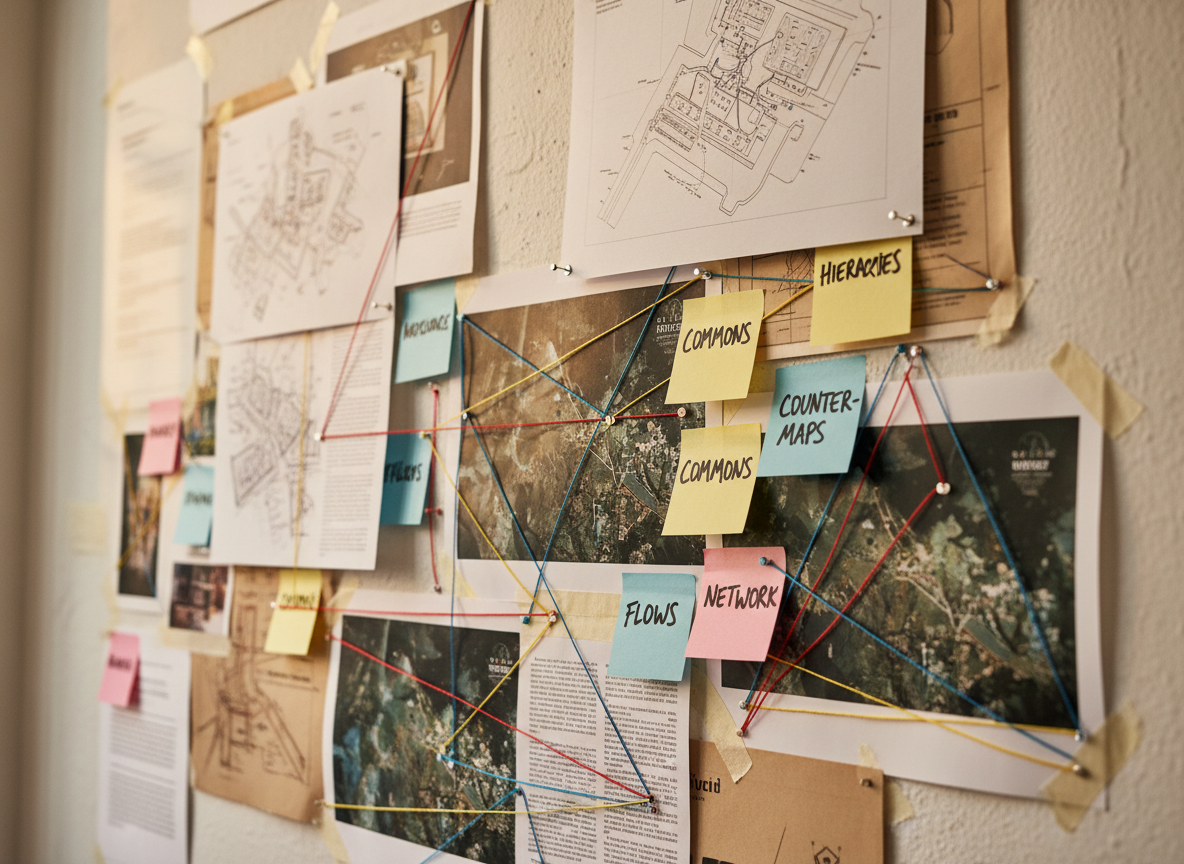
A detailed close-up of a textured research wall in a contemporary studio, where overlapping artifacts are pinned and taped: hand-drawn sections on tracing paper, printed satellite imagery with colored threads connecting distant points, photocopied academic excerpts, and sticky notes with bold, handwritten keywords like “hierarchies”, “commons”, and “counter-maps”. Neutral painted plaster surrounds the dense cluster of material. Gentle side lighting from a nearby window creates soft shadows that give depth to the layers of paper. The atmosphere feels intense yet organized, capturing the energy of critical, interdisciplinary spatial research. Photographed at a slight angle with shallow depth of field, in warm, realistic tones that highlight tactility and process.
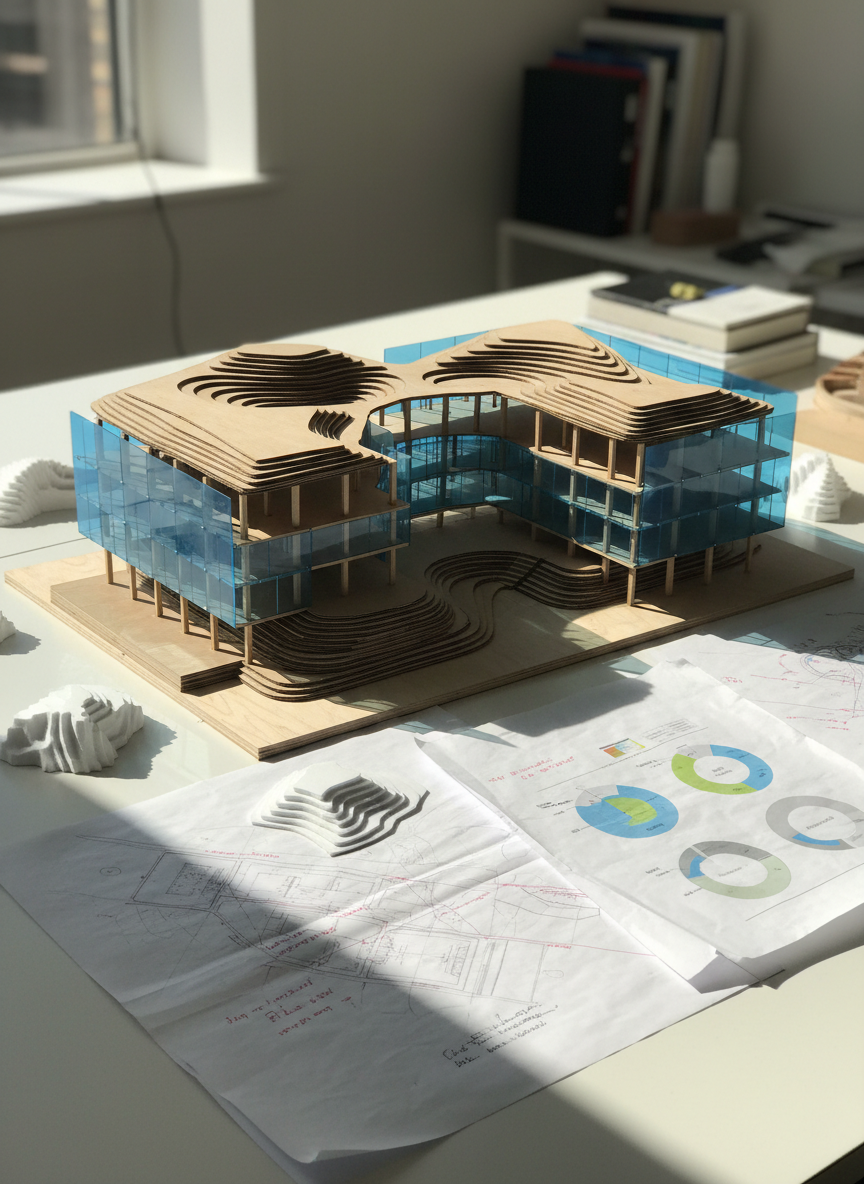
A large, meticulously detailed architectural model of an imagined collaborative research hub, built from a mix of translucent acrylic, raw plywood, and recycled cardboard, occupies the center of a clean studio table. Surrounding it are layered tracing-paper site plans, color-coded mapping diagrams, and small topographic foam blocks suggesting shifting terrains. Soft daylight pours through an unseen high window, creating crisp shadows that emphasize overlapping forms and materials. The atmosphere feels analytical yet hopeful, suggesting new spatial futures. Photographed at eye level with slight depth-of-field blur in the background, in a clean, modern, photographic realism style that highlights textures and precise edges, ideal for a homepage hero image about critical spatial research and collective alternatives.

Methods for Collective Spatial Inquiry

Our methodological framework weaves critical, participatory, and spatial research into shared practice. We prototype alternatives with communities, institutions, and activists. Explore how we work and propose a collaboration through the methods page.

Offerings
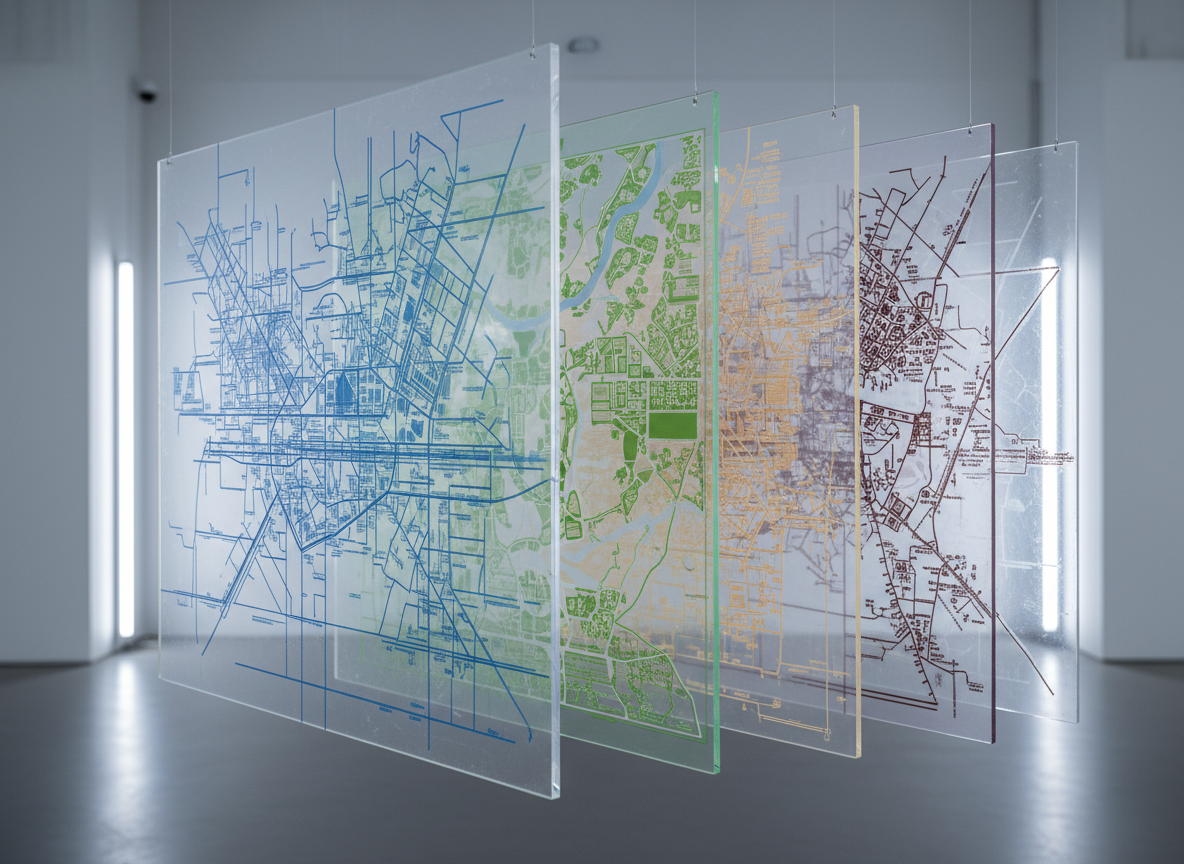
A series of interconnected, translucent acrylic panels are suspended in a neutral gallery-like space, each etched with different layers of a city: infrastructure, public space, ecological systems, and informal networks. The panels overlap to form a complex, semi-transparent spatial collage that shifts in intensity depending on the viewer’s angle. Cool, even studio lighting from both sides creates subtle reflections and delicate edge highlights, while the background fades into soft blur. The mood is contemplative and investigative, suggesting multidimensional ways of seeing space. Photographed straight-on with a slight wide-angle lens, in a clean, minimalist, photographic realism style that emphasizes clarity, layering, and critical analysis.

We facilitate workshops, labs, and spatial audits that unpack power relations and open up situated, collective understandings of space.
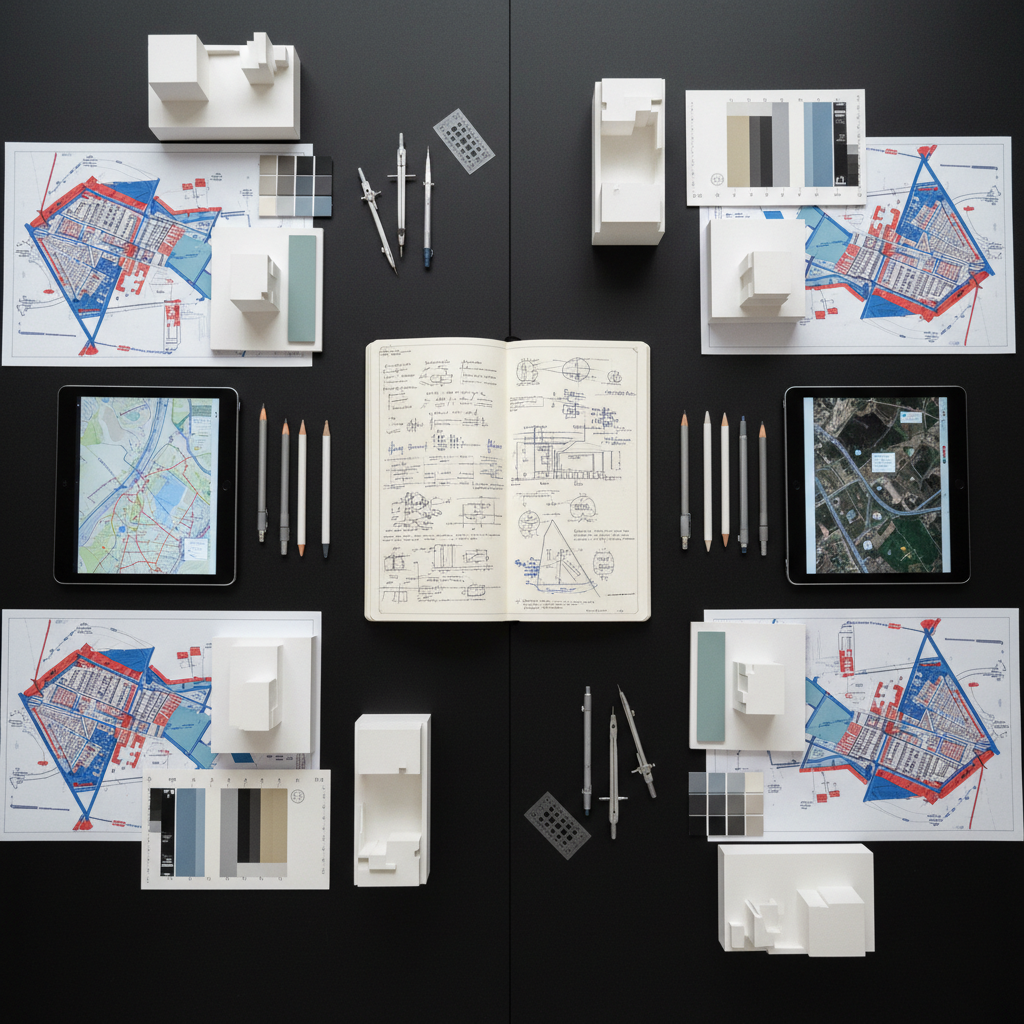
An overhead view of a long, matte-black research table covered in carefully arranged spatial research artifacts: annotated site maps with bold red and blue markings, folded urban morphology diagrams, small 3D-printed white massing models, and color swatches clipped to the paper edges. A open notebook filled with dense, handwritten spatial diagrams sits at the center, flanked by technical drawing tools and a digital tablet displaying a layered GIS map. Soft, diffused overcast light from above creates minimal shadows, reinforcing a calm, analytical mood. The composition is symmetrical from a bird’s eye perspective with crisp, photographic realism, conveying rigorous yet experimental spatial inquiry across disciplines.

Co-design sessions translate research insights into spatial scenarios, prototypes, and guidelines tailored to institutions, municipalities, and grassroots initiatives.

Collaboration request

Use this form to outline your spatial context, stakeholders, timelines, and methodological needs so we can design a collaborative process.

← Back

Thank you for your response. ✨